"Military Brat” Spends Life Savings on Grand Gift for Deployed Dad
Virginia teen treats dad to the vacation of a lifetime in the Grand Canyon—and learns important financial (and life) lessons in the process.

By Allison Stevens | March 26, 2026
In most families, parents take their kids on vacation—not the other way around. But the Bosworths aren’t like most families, and Matthew is no ordinary kid.
A few years ago, Matthew surprised his dad, Shawn, with a dream trip to a world-class destination: the Grand Canyon. The teen announced the trip the night Shawn, an aircraft technician in the U.S. Navy, returned home from a 10-month deployment to India, the United Arab Emirates and other points across the globe.
“When he presented his plans, I brushed him off, like, ‘Yeah, dude, you're funny,’” Shawn recalled. “And then he showed me that he was serious. He definitely caught me off guard—in the best way."
Matthew’s generous gift was years in the making. He hatched the plan at age 11, when he learned of his dad’s upcoming deployment. Two months before Shawn left, Matthew opened a 12-month certificate of deposit, a high-return, low-risk savings account, with Navy Federal Credit Union. He timed its maturity date to his dad’s eventual return so the pair could take the trip soon after Shawn’s homecoming.
While Shawn was away, Matthew saved every cent he could. Birthday money, holiday gifts, cash from yardwork and other odd jobs—everything the tween earned went into his savings account. In the meantime, Matthew studied the driving route and researched hotels near the famed national park, reviewed restaurants and explored activities.
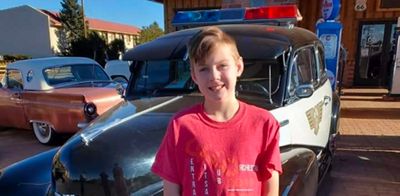
By the time Shawn returned home, Matthew had socked away $1,100—enough for several nights at hotels, a trip to an antique car museum along the way and plenty of souvenirs. Tickets to the national park are free for military families, and Matthew’s mom assured him she would cover meals and other expenses. A few days later, Matthew and Shawn headed out from their home in Washington state, stopping at points of interest on the nearly 24-hour drive to the immense river valley in the Colorado Plateau.
The pair enjoyed 2 full days in the park before heading back home. Matthew’s favorite part was hiking out to a rock that jutted out from a ledge of the canyon. Shawn’s was having evening conversations with his son. “We had a blast the entire time, but when the sun was setting over the canyon, we just sat and talked. It was nice.”

A vital part of our “total force”
Matthew is one of nearly 2 million “military brats”—a population celebrated during April’s Month of the Military Child and on April 15 (aka “Purple Up” Day) in particular. Though sometimes overlooked, these youth are a vital part of a “total military force,” according to Eric Rowe, Navy Federal’s vice president of branch operations and himself a former military child. They support our military through bravery and sacrifice involving frequent moves, family separation and indirect exposure to conflict, he added.
In their honor, Navy Federal has supported Our Military Kids, a nonprofit that funds after-school activities for youth of parents who are serving or who have served in the military. Navy Federal employees—nearly half of whom have direct ties to the military themselves—have also written and sent thank you cards to military kids in April, the Month of the Military Child. “We’re grateful to be able to give these military families that little bit of extra support they need so their kids can pursue what makes them happy and continue to thrive,” Rowe says.
Supporting the military community’s financial security, and educating military kids in financial literacy, is also central to Navy Federal’s mission. For Matthew, that involved saving for quality time with his dad after his long absences. Fortunately, Matthew got his savings start early (before he could walk or talk) when his mom, Chelsey, opened a Navy Federal savings account in his name, when he was just 1 year old.
Teaching kids to save
As Matthew grew, Chelsey, a member service representative at Navy Federal, encouraged her young son to save, save, save. She explained the benefits of an interest-bearing account rather than a piggy bank. She pulled out a calculator to demonstrate the dividends he’d earn in a high-interest account. She said his money would grow with him—and it did.
At 7, Matthew deposited his life savings ($70) into Navy Federal’s trademark Special EasyStartSM Certificate. With Chelsey’s help, he added to his account over the course of the year, and by the time his dad returned home from a deployment to Colombia, Matthew had a small nest egg of $111.
Matthew dreamed of buying his dad a motorcycle, but with his mom’s guidance, he set a “more realistic goal.” He decided instead to treat Shawn to a special father-son outing. When Shawn returned home from Colombia, Matthew surprised him with his first gift: lunch for two on the military base near their home in Jacksonville, Florida, followed by a short round of golf and some souvenir golf balls.
In the years since, Chelsey has continued to educate her kids in financial literacy. They visit Navy Federal’s mobile app* and website to learn smart money strategies in everything from savings and budgeting to credit and college and life planning. “A lot of people think financial information is for adults,” Chelsey says. “But my kids get a lot of great information there."
Jaspreet Chawla, Navy Federal’s senior vice president of savings products, echoes the point. “Many people may not realize children—with a parent or guardian co-signing—can open savings accounts to start building strong savings habits,” she says. “That number should be higher. Adopting strong savings financial habits at a young age can lead to financial success down the line.”
To get kids on the right financial track, parents and caregivers can follow Chelsey’s lead, she says. They can open a savings account for their kids and encourage saving from an early age. They can include kids in family spending decisions, such as what to buy at the grocery store and where to go on vacation. And, they can load prepaid debit cards, like Navy Federal’s GO Prepaid Card, for teens. If they blow through the money quickly, they can encourage better decisions. If they make good choices, they can reload the card for a higher amount.
Chelsey and Shawn are also teaching their kids about passive income. They bought a house in Florida; Matthew and his sister help with upgrades and repairs and receive a portion of the rent (about $60 each) in return. “That passive income really helps build up those savings,” Chelsey said. What’s more, it’s inspired Matthew to consider a career in real estate.
First, though, Matthew saved for a shorter-term goal: a used car that he can repair with his dad, a hobby they both enjoy.
“I don’t think he values money the way most people do,” Chelsey said of her son. “He just wants to use it to make people happy.”
Blog Resources
-
Mission Stories
-
Mission Stories
-
A31757_424_SpecOps_CorpComm_Month_of_the_Military_Child_Blog_Post_Blog_424


Disclosures
This content is intended to provide general information and should not be considered legal, tax or financial advice. It is always a good idea to consult a tax or financial advisor for specific information on how certain laws apply to your situation and about your individual financial situation.